Why Dominions 6 is deeper than it looks
A guide to the twelve layers of choice in Dominions 6, from designing a god to guessing what a neighbour plans.
verified 6.37updated 2026-09-30 · Jake56 min read
On this page · 19 sections
- What a screenshot shows
- The game begins before the first turn
- Layer one: you are betting a whole game on a god
- The nation is the other half of the bet
- Layer two: the map is information, and information is for sale
- Layer three: tempo, forts and the second map
- Layer four: the economy is a set of bottlenecks
- Layer five: magic is a slow engine, and someone wants to break it
- Layer six: the pieces that matter most are the ones that break easiest
- Layer seven: the single unit as a weapon
- Layer eight: every strength is someone else’s target
- Layer nine: you write the battle and then watch it
- Layer ten: hidden hands
- Layer eleven: the turn is a weapon
- Layer twelve: other people
- The computer is a teacher, not a rival
- Three short stories
- The long arc
- Where to start
What a screenshot shows
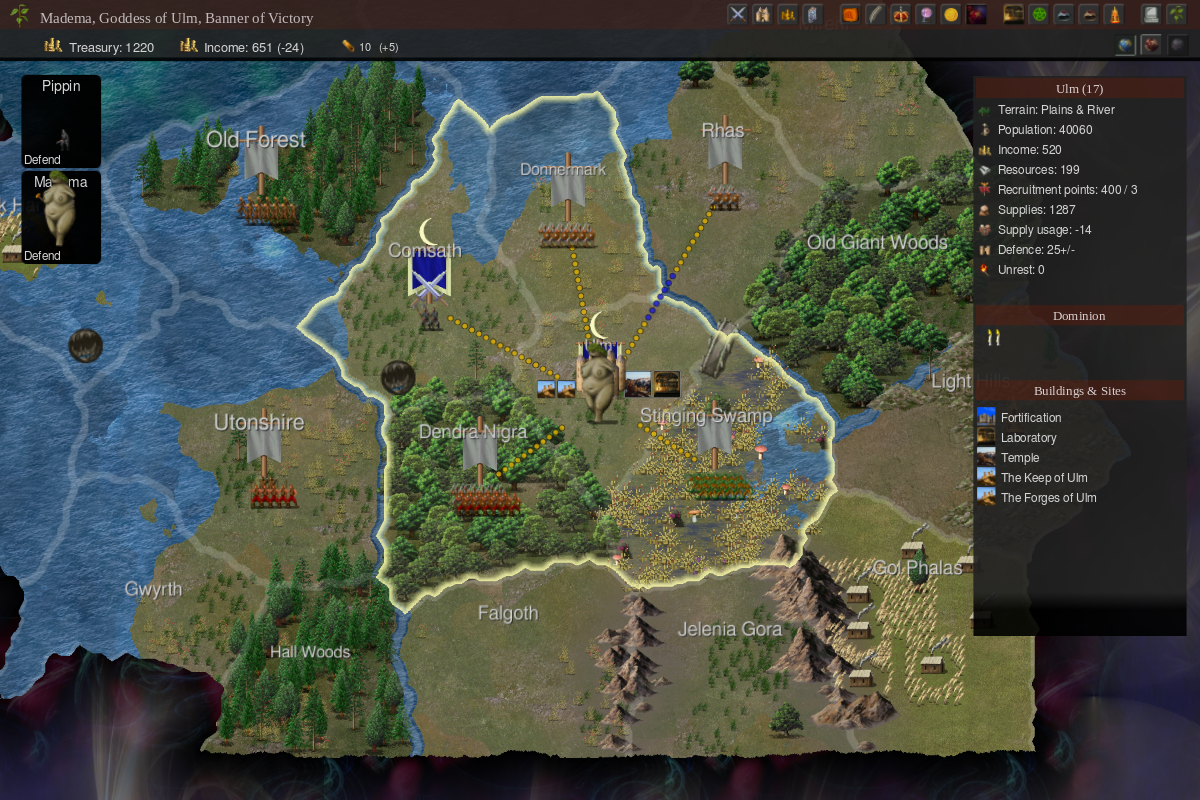
Open a screenshot of Dominions 6 and you see a map cut into provinces, some coloured banners, a few stacks of little figures, and a pile of menus. The figures are sprites in the style of another decade. A viewer could reasonably conclude that this is a game about moving armies from one province to the next until one colour covers the map.
That reading is not foolish. Armies do move. Provinces do change colour. But a screenshot is a single frozen instant, and the game does not live in instants. It lives in the gap between what you know and what is true, and in the gap between what you plan and what your neighbour plans. Neither gap shows up in a picture.
Here is what a screenshot cannot show. The banner on a province says who holds it, but not whose god the people there believe in, and the game keeps those as two separate maps. The army in the corner is one stack among several, and you do not know whether the commander at its head is a veteran or a recruit. The empty province next to it might hold nothing, or it might hold a hidden column that will arrive at your border next turn. The enemy mage who looks harmless is three turns from finishing a spell that will change the whole map. And when those armies finally meet, you will not steer the battle. You will have written its script the turn before, and all you can do is watch whether you guessed well.
One player put it memorably: “Dominions is like chess, but with 1000 different pieces and the ability to have the referee randomly cast blizzards, fireballs and other nonsense at pieces on the table.”
So the game is not “moving armies around.” It is the work of deciding, with partial information and before anyone else has shown their hand, what sort of god to be, what sort of army to build, what to show, what to hide, and when to strike. The armies are how those decisions get delivered.
This article walks through the layers of that work. It does not teach you how to win. It tries to show you where the choices are, so that by the end you can see why people who play this game talk about it the way chess players talk about chess, and why it tends to be at its best with a group of friends who are all trying to trick each other.
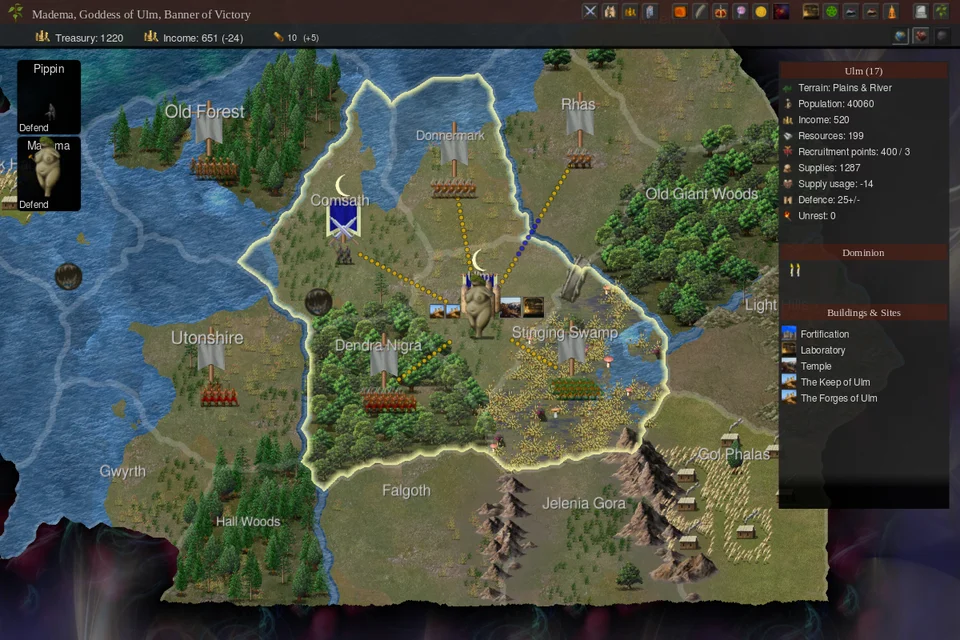
Open full size (1200 x 800, 1.6 MB)
The game begins before the first turn
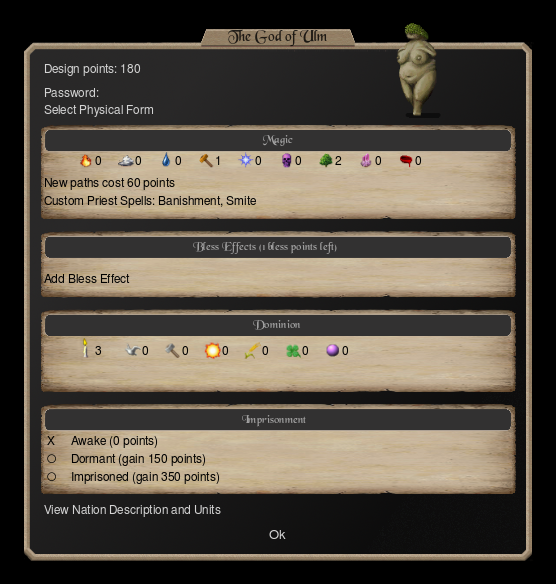
Most strategy games start you on equal footing and let you diverge. Dominions does the opposite: it makes you diverge before the first turn. The game’s first screen is not a map. It is a character sheet.
When you begin, you do three things in sequence, and all are irrevocable. You choose an era, you choose a nation, and you design a pretender godpretender · The god you design before the first turn from a limited budget of points, covering its body, magic paths, dominion, scales and how soon it arrives. Full article from a limited budget of points. Every point spent on one thing is a point you cannot spend on another. Every nation has a fixed list of what it can recruit and what it cannot. There is no “starting position” you can adjust later; the shape of the entire campaign is determined by these decisions, made before a single unit has moved.
The era choice is the first and quietest. Dominions 6 offers three ages — Early, Middle, and Late — and each era contains a different roster of nations, with different unit pools and different magic access. The same nation can look completely different across the three ages. Choosing Early rather than Late is not cosmetic; it decides which nations are even available to you and your opponents, and it sets the flavour of the entire game. Most multiplayer groups pick an era before anything else, because it defines what kind of game they are playing.
This is the game’s first and most consequential bet. You are wagering the next twenty hours of play on a design you cannot yet test, against opponents you have not met, on a map you have not seen. The rest of the game is how you play out the consequences of that bet. Some players restart endlessly in the pretender designer, searching for the perfect build. Others pick a concept and commit, accepting that the design will have weaknesses and that the skill is in covering them. Both approaches are valid. Both are playing the same game: the game of committing under uncertainty.
Layer one: you are betting a whole game on a god
Think of the pretenderpretender · The god you design before the first turn from a limited budget of points, covering its body, magic paths, dominion, scales and how soon it arrives. Full article budget as a set of competing appetites. A powerful body is expensive, and it gives you something that can fight and survive, but it leaves less for everything else. The body is also a chassis — the specific physical form your god takes. Some chassis are huge and combat-capable (a dragon, a titan, a giant serpent); others are frail and support-oriented (a sage, a mage, a fountain). The chassis decides what your god can do in battle, what magic it starts with, and what spells it can eventually learn. Choosing a chassis is choosing a role for the one unit that will matter most across the entire game.
 Ancient Kraken
 Allfather
 Ageless Olm
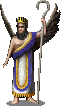 Ahura of Wisdom
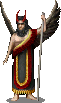 Angra Mainyu
Magic paths make the god and its priests better casters and open the door to the stronger spells, but paths get dearer as they deepen, and spreading thinly across many of them is a well-known way to end up good at nothing. Dominiondominion · The spread of your god's faith. It is not the same as who owns the land, and it matters in battle, in unrest and in how strong your god and its sacred troops are. Full article , the strength of your faith, costs points too, and it decides how well your beliefs spread and hold against rivals. Then there are the scalesscales · The dials chosen with your pretender, such as order against turmoil or luck against misfortune. They shape the whole empire slowly but permanently. Full article — order against turmoil, productivity against sloth, growth against death, luck against misfortune, magic against drain — which shape your whole empire slowly but permanently. And finally you can choose to have your god arrive late, sleeping or imprisoned for years, in exchange for a much bigger budget.
There is a second layer hidden inside the first. Your god’s magic paths do several jobs at once. They set what the god itself can cast. They decide which blessingsblessing · A set of bonuses granted to your sacred units when they fight where your dominion is strong. Your pretender's magic paths decide which bonuses it gives. Full article you can give to your sacred troopssacred · Sacred troops are a special class that needs holy points to recruit. They receive your god's blessing when they fight in a province where your dominion is strong. Full article . They change what your priests can do. So a choice of path is also a choice of which of your troops will be good, and what your holy men can do for them.
Blessings and sacred troops
Blessings deserve their own discussion, because they are the mechanic that connects the god you designed in the first five minutes to the army you command for the next twenty hours.
A blessing is a set of bonuses granted to your sacred units — a special class of troops that requires holy points to recruit and that receives the blessing when they fight in a province where your dominion is strong. The blessing is determined by your pretender’s magic paths. Astral grants a magic resistancemagic resistance · A unit's defence against spells that can be resisted. The target adds a DRN to it, the caster adds one to its penetration, and the caster wins a tie. Full article bonus; Nature grants regeneration; Fire grants an attack bonus or a fire resistance; Earth grants protectionprotection · What stands between a unit and a blow, from its armour plus any natural protection of its own. The defender adds a DRN to it, and a hit wounds only when the damage total is higher, so a tie does nothing. Full article ; and so on. A pretender with the right path combination grants a blessing that multiplies the power of the sacred troops it was designed to support.
Sacred troops themselves come in two flavours. The cheaper ones are ordinary soldiers who happen to be blessed — a sacred spearman is a spearman with a bonus. The expensive ones are national elites: sacred cavalry, sacred giants, sacred mages with special abilities, sacred thugsthug · A single commander built up with gear and buffs to win fights on its own, used to take provinces cheaply. A light thug beats small province defence; a heavy one handles any undefended troops. Full article who become very dangerous when blessed. The design decision is which sacred units to make your army’s core, because your holy point budget is finite and every sacred unit you field is a unit your priests could have used to bless someone else.
The strategic chain is well known. You start with the sacred troops your nation offers. You look at what would make those troops strong. You design a pretender with the paths that grant that blessing. You commit resources to blessing those troops in the field. A nation with a powerful sacred unit and the right blessing can field an army that punches far above its weight, which is why “bless rush” — flooding the map with blessed sacred troops early — is a classic strategy in competitive play.
Pretender death and return
Your god is not invincible. It can be killed in battle, assassinated by an agent, or lost to a remote spell. When it dies, it does not disappear forever. It enters a limbo state, and after a period of turns — depending on whether it was awake, sleeping, or imprisoned — it returns at your capital. Its magic paths may be reduced, and its awakening may be delayed, but it comes back. The game’s own victory condition treats a god that has been killed too many times as vulnerable, but the ordinary case is that a god returns.
This has two strategic consequences. First, your god is a resource you can spend: you can send it into danger knowing it will come back, as long as you can afford the downtime. Second, killing an opponent’s god — even temporarily — is a real strategic gain, because it takes a powerful unit off the board for a number of turns. A campaign that eliminates an enemy god for six turns is a campaign that has effectively removed the enemy’s strongest piece for the span of a major operation.
And there is a third, quieter consequence. The best design is usually not the one with no weaknesses. It is the one where the weakness is chosen, and the rest of the plan covers it. A god that is fragile can be kept behind an army. A nation with poor mages can rely on its god and its soldiers. A design that tried to fix every weakness tends to be thin everywhere, like a person who packed for every possible weather and can carry none of it.
Community wisdom calls this “the bet you place before the game begins.” Unlike Magic: The Gathering, where you build a deck and then draw into it, Dominions makes you commit your entire strategy — your god, your scales, your bless — before you see the map. The opening hand is your whole game.
The nation is the other half of the bet
Your god does not stand alone. It stands on a nation, and every nation is a different game.
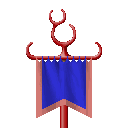
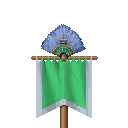
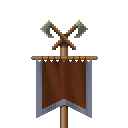
Nations differ in what they can recruit, which troops are sacredsacred · Sacred troops are a special class that needs holy points to recruit. They receive your god's blessing when they fight in a province where your dominion is strong. Full article , which mages they start with, which terrain they like, and how their faith works. Some have cheap, strong expansion troops and a thin late game. Some are fragile early but hold an answer to everything once they reach a particular kind of magic. Some have a rule that bends the game around itself: a nation whose faith spreads in an unusual way, or one whose dead keep fighting, or one that lives in the sea. You do not get to pick the parts of a nation and leave the rest. You get the package, and you learn what it wants you to do.
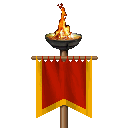 Abysia
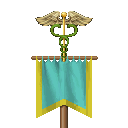 Arcoscephale
 Ulm
Ulm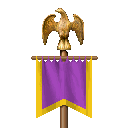 Pythium
 Atlantis
 Mictlan
 Jotunheim
 Ys
Ys
It also means that nation limitations are not flaws, they are the shape of the puzzle. A nation with no good archers has to answer archers some other way. A nation that cannot research well has to win before the research gap opens, or find a way to steal what it cannot build. A nation with superb mages and poor soldiers has to keep the mages alive long enough for them to matter. Being good at Dominions means being good at your own nation’s limits, at knowing which fights it should never take and which ones it should force.
One veteran player described the multiplayer metagame this way: “The entire reason to call the diplomatic/interpersonal state of the game a meta-game is to apply game theory to it.” The nation choice is the first move in that game.
Layer two: the map is information, and information is for sale
Dominions hides things. Not all of them, and not perfectly, but enough that the map you see is always a partial and slightly out-of-date picture of the real one.
What you see in a province depends on what you have there. A scout tells you who holds it and something about the troops standing in it — but the report is fuzzy. Community sources describe scout reports as accurate to within roughly thirty percent, meaning you see “about 20 heavy infantry” when the reality could be 14 or 26. A priest adds information about faith. A spy, which is a different piece altogether, can tell you about income, unrest, defences and sites, and can do things besides look. Some spells show you military strength very precisely from afar — one player noted that casting Fires from Afar at an enemy province does almost no damage but tells you exactly how many mages of each type are present. Owning the province shows you everything. Each of these is a different price for a different slice of the truth, and choosing which to buy is a decision, not an administrative step.
Players have a name for the cheapest form of scouting: pingingpinging · The cheapest form of scouting, which is sending one cheap commander into a province to see what defends it, not to conquer it. Full article . You send a single cheap commander — often an indie commander you recruited for the purpose — into a province, not to conquer it but to see what happens. If the province is empty, you learn nothing. If it is defended, you learn the composition of the defence, and you lose a commander who cost you almost nothing. The information is worth the trade.
There is a darker version of this. One player observed that filling your province with expendable scouts can “dilute the pool” of potential targets for certain remote-attack spells, which roll against the entire stack of commanders present. A Mind Hunt that would have killed your best mage instead hits a scout you recruited for a handful of gold. The scouts are not just watching; they are armour.
Now consider what an enemy army tells you. A stack of heavily armoured infantry says something about what your neighbour intends. So does a stack of light raiders, or a lone commander with no troops. An army with a few powerful mages implies a different plan from one with none. Veteran players read armies the way a poker player reads a bet: what does this composition want to do, and what does it leave exposed? Similarly, what a neighbour does not send is information. A nation that stops expanding and starts massing at a border is telling you something.
The other side of this is that you are also a source of information, whether you like it or not. Every army you move is a statement. Every province you fortify is a hint at where you fear attack. Some players deliberately show a weak border to draw an opponent in. Some keep a strong force in an unexpected province so that a scout reports the wrong number. Some build their whole army around stealthy units that reach a border unseen, so that the first thing the defender learns is that the fight has started.
One of the most powerful and least obvious information tools is the score graph. The game shows every player a running tally of provinces, income, army size, and other metrics. The manual notes that this can come to dominate a multiplayer game, as everyone tracks who holds the most provinces and who fields the largest army, and so who looks like the main threat. Experienced players hide their graphs, or learn to read others’ graphs for signs of what they are building. The scoreboard is not just a scoreboard; it is a weapon.
Layer three: tempo, forts and the second map
The early game is a race. There are neutral provinces on the map, and every one of them that you take adds people, income, resources and recruitment to your side. Land pays for more land. The player who takes five provinces a few turns before a rival takes three has started compounding, and compound growth is hard to catch.
Community consensus is blunt: “Research is your primary economy over gold and over gems.” A nation that invests in research early can unlock the spells that change the mid-game, while a nation that ignores it will find itself outmatched by magic it cannot answer.
Then come forts. A fort protects a province, yes, but the lesser-known fact about forts is that they are economic. A fort lets a province make use of more of what it has, it gathers resources from the provinces around it, it extends your supply, and it opens up a wider list of troops to recruit. That is why experienced players treat the placement of the second and third fort as a strategic decision. Forts placed too close can undercut each other. Forts placed well turn a scatter of provinces into a network that feeds itself. The cost of a fort, in gold and in months of waiting, is gold and months you do not spend on soldiers, so every fort is a small bet that the network will pay back before the neighbours arrive.
Alongside forts are laboratories and temples. A lab lets your mages research and forge; a temple lets your priests preach, bless, and spread faith. These buildings are the infrastructure of your nation’s magical and religious life, and deciding which province gets which building is part of deciding what kind of nation you are building.
And now for the feature that most surprises newcomers: there is a second map. Dominiondominion · The spread of your god's faith. It is not the same as who owns the land, and it matters in battle, in unrest and in how strong your god and its sacred troops are. Full article is the spread of your god’s faith, and it is not the same as who owns the land. You can conquer a province and find its people still believe in someone else. You can hold a border and watch your own faith leak over it. Faith spreads from your god, your capital, your temples and your prophet. It also matters in battle, in unrest, in the dials that tilt your empire, and in how strong your own god and its sacred troopssacred · Sacred troops are a special class that needs holy points to recruit. They receive your god's blessing when they fight in a province where your dominion is strong. Full article are in the field. A god fighting in enemy faith is weaker. A god fighting in its own faith is stronger. And a god with no faith left anywhere on the map is out of the game, which means a siege that cuts off the last of a rival’s dominion can eliminate him without a single dramatic battle.
Layer four: the economy is a set of bottlenecks
The word economy suggests a single number going up. In Dominions it is several different limits, and the skill is in knowing which one is stopping you right now.
Gold pays for training, for upkeep, for buildings and for mercenaries. Resources represent equipment, belong to each province, and are not saved from one turn to the next, so a province with good resources can arm heavy troops and a province with poor ones cannot, however much gold you pour in. Recruitment capacity limits how many of the better units a province can produce in a turn. Holy strength limits how many sacred troopssacred · Sacred troops are a special class that needs holy points to recruit. They receive your god's blessing when they fight in a province where your dominion is strong. Full article you can field. A nation can be rich in gold and still stuck because its resources are in the wrong place, or because its faith is too weak to support its elite.
So an expensive unit is not one price but several: gold for the training, resources for the kit, recruitment for the slot. When a turn is not going how you hoped, the useful question is which of those four is the wall. If it is gold, you want income. If it is resources, you want forts and better provinces. If it is recruitment, you want population or fortification. If it is holy strength, you want dominiondominion · The spread of your god's faith. It is not the same as who owns the land, and it matters in battle, in unrest and in how strong your god and its sacred troops are. Full article . Each of these points at a different part of the game, which is one reason beginners feel the game is opaque, and experts feel it is a puzzle with a hundred moving parts.
There are two additional economic tools worth knowing.
Mercenaries are troops you rent for gold rather than recruit from your provinces. They arrive instantly, they can be placed in any friendly province, and they fight for you for a monthly fee until you dismiss them. This makes them a flexible emergency reserve — a way to plug a hole in your defence without waiting for a recruitment cycle, or to add a specific unit type your nation does not normally have. Their cost is ongoing upkeep, and their loyalty ends when your gold does. A player who relies on mercenaries will find them expensive; a player who uses them selectively will find them a strategic multiplier.
Province defenceProvince defence · The garrison a province raises on its own when you invest gold in it. You do not control it directly, it is capped by the province's population, and it defends automatically. Full article (PD) is the autonomous garrison that a province generates on its own when you invest in it. PD units are not under your direct control — they exist to defend the province, and they do so automatically. Investing gold in PD is a way to secure a rear province without stationing a real army there, or to raise the cost of a raid or a small attack. PD is capped by the province’s population, so a small province can only hold so much, but even modest PD is enough to deter a lone scout or a light raid. Building PD is not glamorous, and beginners often neglect it, but a nation with well-funded PD is a nation that does not have to garrison every province with a real army.
Raiding: the war you fight without winning
Most of the time, you fight where the enemy is. Sometimes you fight where the enemy is not.
Raiding is the doctrine of the small fast force. You take a handful of cheap mobile units — light cavalry, flyers, stealthy commanders with a few soldiers — and you send them into undefended enemy territory. They are not there to win a battle. They are there to burn a province, take its income away for a turn, force the enemy to send something to chase them, and then leave before the chase arrives. The point is not the damage; the point is what the damage costs the enemy in attention.
The strategic logic is this. In an even war, you cannot out-produce an enemy with better provinces or better armies. But you can make their production unusable by threatening it. A province that is raided loses income that turn, and a province that is repeatedly threatened forces the defender to keep an army at home instead of at the front. Every unit garrisoning against raiders is a unit not attacking you. The raider’s value is not measured in kills; it is measured in the enemy’s response.
Community guides describe this as “applying raiding pressure” — pushing the front line back to the enemy and leaving you with more and more provinces every turn. The trick is to split your force into as many chunks as possible that are still likely to win their battles. The smaller the pieces, the more land you can take; the larger the pieces, the more likely each battle is won. The skill is finding the balance point, and it depends on what your opponent has available to defend with.
There is a second mode, pillaging, which is what an army does when it is standing in an enemy province and chooses to burn it rather than hold it. Pillaging destroys population, raises unrest, and extracts gold, but it also costs you the province’s future value if you ever meant to keep it. It is a strategy of ending a war, not of winning one. A campaign that ends in a wasteland is a campaign that no one wanted to fight.
The counters are known. Province defence absorbs small raids. Patrols detect and intercept them. Cheap fast units of your own — especially the same kinds of flyers and light cavalry the raider uses — can catch raiders before they leave. A well-prepared defender keeps a mobile reserve for exactly this purpose. And a defender who over-invests in anti-raider measures is a defender who has pulled too much from the front, which is exactly what the raider wanted.
Raiding is one of the reasons the game is best understood as an economic contest with a military dimension rather than the other way around. Armies exist to make the economy work. Raids exist to make the enemy’s economy stop working. A campaign that never raids is a campaign that is fighting only half the war.
Layer five: magic is a slow engine, and someone wants to break it
Magic in Dominions is a long investment, not a button. Its strongest effects take many turns of research, a stockpile of gems and a few fragile people to deliver, and each of those three is something an opponent can starve, steal or kill. A screenshot of a spell list shows none of that planning.
The basic picture is this. Your mages belong to paths — Fire, Air, Water, Earth, Astral, Death, Nature, Glamour, Blood, and Holy. Your nation researches schools of magic — Blood, Conjuration, Alteration, Evocation, Construction, Enchantment and Thaumaturgy — which unlock spells of rising power. A spell needs both: the right research, and a mage with enough skill in the right path. Research accumulates turn by turn from mages you set to study in a laboratory, which means every mage you commit to study is a mage who is not doing something else. Your mages can also search provinces for magic sites, which produce gems, the currency of the stronger magic. They can forge magical items, or perform rituals that change provinces, or go out with the army and cast in battle. One mage, one turn, one job.
- FFire
- AAir
- WWater
- EEarth
- SAstral
- DDeath
- NNature
- GGlamour
- BBlood
- HHoly
Gems are what make it a decision rather than a schedule. The same pile of gems could be a battle spell tomorrow, a ritual that shifts the economy, an item that makes one commander a monster, or a reserve against the day you need an answer. Holding a large reserve while losing a war is an old complaint among players, because gems only count as power once they are turned into something. Spending them all too early leaves you with no answer to the surprise that will certainly come.
Blood magic: the path that eats its own
Blood is a path that works differently from the others, and it deserves its own note. Where every other path is powered by gems that come from sites and provinces, Blood is powered by blood slaves — a resource you generate by blood hunting, which is a ritual that kills population in a province and extracts the slaves from the blood. Blood slaves are what Blood spells cost, and Blood rituals tend to be powerful in exchange for the damage they do to your own economy.
This makes Blood a strategic choice rather than just another path. A Blood nation can cast spells that other nations cannot, but it does so by destroying the provinces it rules. A Blood economy is a nation that trades long-term population growth for short-term magical power, and it must therefore win before the population loss catches up with it. Blood nations are the game’s purest example of a strategy that has to be executed on a timer.
Global enchantments
At the top of the ladder sit the global enchantmentsglobal enchantment · A spell that changes the whole world. Only a limited number can be active at once, and an enemy can break one by contesting it or by killing the mage who cast it. Full article , spells that change the whole world. A limited number of them can be active at once, which makes the slots contested, and a global can be broken by an enemy who contests it or who kills the mage who cast it. So the most powerful spell in a nation’s arsenal is also a mage with a target painted on him, and protecting that mage, or being the one who finds him, becomes a real part of the game. A large portion of a late campaign can be won by the quiet dispatch of an unassuming individual in a remote laboratory.
Communion: the mage collective
There is a mechanic that transforms a group of ordinary mages into something far greater than the sum of its parts, and it is one of the most powerful and most complex subsystems in the game.
A communioncommunion · A collective of mages who share the burden of casting. Masters do the casting; Slaves lend their power, raising the Master's path levels, and absorb the fatigue. Full article is a collective of mages who share the burden of spellcasting. One or more mages act as Masters, doing the actual casting. The rest act as Slaves, contributing magical power and absorbing the fatiguefatigue · Strain that builds up in a unit. Casting tires mages, heavy armour tires the wearer, and a tired unit takes armor-defeating hits much more often. Full article that the spells would otherwise cost the Master. The effect is that a group of weak mages can cast spells far beyond their individual skill, because the Slaves boost the Master’s path levels.
The path boost is the draw. Community documentation gives the rule: two Slaves grant the Master +1 path level, four grant +2, eight grant +3, and so on, doubling each time. A Master who could only cast second-level spells alone can, with four Slaves, cast fourth-level spells. A group of cheap astral mages who individually could barely cast anything become, together, a battery capable of the most powerful battlefield magic in the game.
The fatigue sharing is the cost. The community’s guide explains that the fatigue cost of each spell is divided among the Master and all the Slaves. If the Master is significantly more skilled than the Slaves, the Slaves take multiplied fatigue as their minds strain to keep up; if the Master is less skilled, they take less. Slaves who take too much fatigue can be rendered unconscious, and pushing them past the limit can kill them. A communion that is pushed too hard in a long battle can leave a nation’s entire mage corps dead from exhaustion.
The mechanic has three variants. Astral Communion is the most common and the fastest to set up. Blood Sabbath is slower but the Masters accrue less fatigue. Chorus, available only to specific nations, works through shared singing and lets its participants exit more easily. Each variant has its own rules and its own strategic niche.
What makes communions strategically interesting is that they turn a resource — mages — into a different kind of power. A nation with many cheap mages but no individually powerful ones can build a communion and gain the equivalent of a high-level caster. A nation with one powerful mage can surround it with Slaves and cast spells that would otherwise be impossible. The mechanic rewards planning and risks catastrophe if mismanaged.
Layer six: the pieces that matter most are the ones that break easiest
In a game where you do not control the battle move by move, you might expect the commanders to be interchangeable. They are the opposite. A commander is the thing that decides how many troops you can lead, whether they hold their nerve, what magic can be cast, and what orders exist at all.
Leadership limits the size of the army a commander can move. It also changes morale, in broad terms: a good leader steadies the line, and a poor one leaves a large force nervous. Units of different kinds, such as the undead, magical creatures and ordinary soldiers, need their own kind of leadership, and without a qualified leader they tend to break. That gives you a list of things to protect and a list of things to go after. It is hard to win if you cannot lead your army, and there is a long history of armies that were fine until the one important person was gone.
Mages in battle are a separate kind of fragile. Casting tires them, and heavy armour makes them tire faster. A mage hit while preparing a spell can have it interrupted. They are powerful and delicate, and getting one into the right place, protected and buffed, with the right spell in the right round, is one of the craft skills of the game.
One community thread on assassination described a tactic in which a powerful summoned creature was scripted to retreat immediately at the start of every battle, making it nearly impossible to kill even with dedicated patrollers. The counter — using rings of returning, or forcing the creature into a fight it could not flee — was itself a subject of debate. This is the game in miniature: a strategy, a counter-strategy, and a meta-conversation about which works.
So the general principle is that the strength of a force is concentrated in a few individuals, and those individuals are also the targets. That is what makes the assassin, the sabotaged lab and the well-timed ambush so dangerous, and it is why defending your key people is as much a part of strategy as building your army.
Layer seven: the single unit as a weapon
Most of the game is played with armies. A significant part of it is played with one person.
The pattern is this. You take a single commander — a powerful one, or an ordinary one equipped carefully — and you build it into something that can win fights on its own. You give it the best armour you can forge, a weapon that covers the enemies it will face, a handful of magic items that change what it can do. You script it to cast its own buffs in the first rounds of battle, then charge. And then you send it, alone or with a small escort, to do the kind of work that would otherwise require a full army: raid a border province, assassinate a mage, break a siege, hold a choke point.
Community vocabulary distinguishes the sizes. A light thugthug · A single commander built up with gear and buffs to win fights on its own, used to take provinces cheaply. A light thug beats small province defence; a heavy one handles any undefended troops. Full article is a commander built to take on small volumes of province defenceProvince defence · The garrison a province raises on its own when you invest gold in it. You do not control it directly, it is capped by the province's population, and it defends automatically. Full article — the cheapest possible unit that can reliably capture a border province. A heavy thug can take on any volume of undefended troops. A supercombatantsupercombatant · The fullest form of the single-unit plan, which is one unit buffed with spells and equipped with the best items, able to defeat whole armies in one battle. Full article is the fully realized version: a single unit buffed with spells and equipped with the best items, capable of defeating whole armies in one battle. A light thug costs a few dozen gems and can be replaced. A supercombatant costs a fortune and a full pretenderpretender · The god you design before the first turn from a limited budget of points, covering its body, magic paths, dominion, scales and how soon it arrives. Full article design, and losing one is a campaign-altering loss.
There is a support role too. A flufferfluffer · A mage whose whole job is to buff a thug before the fight and then retreat. Full article is a mage whose entire job is to buff a thug and then retreat — casting Body Ethereal or Regeneration on the thug before the fight starts, then leaving before the thug does its work. The fluffer is a force multiplier: a thug with buffs is worth several thugs without them.
What makes this work is items. Items are the way gems become individual power. A gem is worth nothing until it becomes something — a battlefield spell cast once, a ritual that changes a province, or an item that a commander carries for the rest of the game. The item is the most permanent form of magical investment: forged once, kept forever, transferred between commanders as needed. A mage who dies takes its spells with it. An item survives the mage and can be handed to the next one. This is why experienced players forge early and often: the item economy compounds in a way that the spell economy does not.
The chain is well known. A pretender with the right paths can forge a specific item. That item turns an ordinary commander into a thug. Enough items turn the thug into a supercombatant. A supercombatant can take provinces alone, which frees the main army to be elsewhere. The whole thing rests on the pretender’s path choices at turn zero — which is why the betting metaphor from the beginning is not just colorful but literal. The god you designed before the first turn decides which items you can forge, which items decide which thugs you can build, which thugs decide which fronts you can hold without an army.
One community guide gives a simple example: a Black Lord from a certain nation, equipped with a main gauche of parrying and a girdle of might, becomes a spammable thug that can take provinces cheaply. The same guide notes that thugs “don’t beat up high power armies, and they aren’t meant to be invincible. They are meant to be cheap and efficient ways of applying a beat down.”
 Main Gauche of Parrying
 Girdle of Might
 Dream Spool
And it cuts both ways. The counter to a single powerful unit is another single powerful unit, or a specific item, or a specific spell. Every supercombatant has a known answer, and experienced players know the answer to each common one. A thug that was unstoppable last week meets a mage with the right banishment spell tomorrow. The arms race between builds and counters is one of the game’s ongoing conversations, and it is conducted at the level of individual items and specific matchups rather than at the level of armies. The community even has a term for it: a counter-thug is a thug built specifically to kill an opposing thug.
The risk, of course, is that the whole plan rests on one person. If your supercombatant dies — to an assassin in the night, to a mind-hunt from across the map, to a bad matchup in a battle you thought was safe — the plan dies with it. A nation that has committed everything to a single unit has no fallback. The community phrase for this is “putting all your eggs in one thug,” and it is both a strategy and a warning.
The defensive onion: why thugs work
Why does a single unit with the right gear survive against hundreds of troops? Because of something the community calls the defensive oniondefensive onion · The idea that stacked defences multiply instead of adding, so each layer that blocks most attacks makes a unit far harder to kill than any single layer could. Full article .
Each layer of defense you add — high defense, ethereal, mistform, awe, mirror image, regeneration — is not additive; it is multiplicative. A unit that blocks three-quarters of attacks with one layer is hard to hit. A unit that blocks three-quarters of attacks with four different layers is not four times harder to kill — it is 256 times harder, because the fractions compound. The DRNDominions Random Number · Two open-ended dice added together. Most contests in the game add one to each side's value before comparing the totals. Written drn, in lower case, when only one die is used. Full article combat system is designed so that no single defensive stat can be pushed high enough to negate everything, but four different stats, each blocking most attacks, produce a defensive profile that ordinary troops simply cannot punch through.
The layers do not all work the same way, and the community has learned which ones combine best. Magic resistancemagic resistance · A unit's defence against spells that can be resisted. The target adds a DRN to it, the caster adds one to its penetration, and the caster wins a tie. Full article , physical defense, ethereal, awe, regeneration, and outright immunity each attack a different link in the combat chain. A unit that is hard to hit and hard to damage is worth far more than a unit that is very hard to hit and easy to damage, because the second one dies to the first lucky roll. This is why the craft of thug-building is not “maximize one stat” but “layer different defenses.”
A community guide lists the standard defensive layers: Body Ethereal (makes physical attacks miss most of the time), Mistform (reduces damage from every hit), Regeneration (heals back the damage that gets through), Fire Shield (punishes the attacker for hitting), and various resistances. Each layer multiplies the thug’s survival against the others. A thug with three layers is not three times as tough; it is, functionally, a different order of being.
The rule that kills thugs
There is one combat mechanic that every experienced player knows and almost no newcomer has heard of: armor-defeating hitsarmor-defeating hit · A hit that lands when the defender's protection roll comes up at its minimum. It ignores a quarter of the target's protection, and becomes far more likely as fatigue rises. Full article .
When a defender rolls their protectionprotection · What stands between a unit and a blow, from its armour plus any natural protection of its own. The defender adds a DRN to it, and a hit wounds only when the damage total is higher, so a tie does nothing. Full article roll, the roll is open-endedopen-ended roll · A die roll with no upper limit. A 6 is worth 5 and the die is thrown again with the result added, for as long as sixes keep coming. Full article — most of the time it is middling, but occasionally it comes up minimum. When it does, the hit becomes “armor-defeating” and ignores a quarter of the target’s protection. At normal fatiguefatigue · Strain that builds up in a unit. Casting tires mages, heavy armour tires the wearer, and a tired unit takes armor-defeating hits much more often. Full article this happens about one time in thirty-six. At high fatigue it happens far more often — about one in twelve between 50 and 99 fatigue, and one in six above 100 fatigue, or when the unit is immobilized by entanglement.
This is why fatigue management is the single hardest skill in thug-building. A thug with high protection and high fatigue is not a thug with less protection; it is a thug that will take armor-defeating hits six times as often as it should. The difference between a well-managed thug and a badly managed one is not how much damage they deal — it is whether they survive the twentieth hit instead of the fifth. Every point of reinvigoration, every item that reduces encumbrance, every buff that reduces the fatigue cost of casting, is an investment in not dying to the one roll that ignores your armor.
It also explains a common new-player mistake: building a unit with extremely high protection and assuming it is safe. High protection is the weakest layer of the defensive onion, precisely because armor-defeating hits are designed to punch through it. High defense, which makes the attack miss entirely, is more valuable than high protection, because a missed attack never gets to roll for armor defeat at all. The community guide is blunt: “Armor Defeating Hits… are a common cause of thug death.”
Layer eight: every strength is someone else’s target
The game’s combat is built as a chain, and each link in the chain can be attacked by something different. Understanding the chain is understanding why armies are not ranked by a single number.
A blow first has to hit. Then it has to get through armour. Then it has to get past whatever else the target has, such as a resistance to fire. Then the target has to stay in the fight, which depends on morale and fatiguefatigue · Strain that builds up in a unit. Casting tires mages, heavy armour tires the wearer, and a tired unit takes armor-defeating hits much more often. Full article . Different troops push on different links. Our own tests have confirmed a few details of that chain, which the wiki publishes elsewhere: the dice behind most rolls are open-endedopen-ended roll · A die roll with no upper limit. A 6 is worth 5 and the die is thrown again with the result added, for as long as sixes keep coming. Full article , which is why very little in the game is impossible and a great deal is only unlikely, and in a tie the side that only has to hold wins it. Another tested detail is that on a unit with no natural protectionprotection · What stands between a unit and a blow, from its armour plus any natural protection of its own. The defender adds a DRN to it, and a hit wounds only when the damage total is higher, so a tie does nothing. Full article , a helm alone decides what stops a blow to the head, and body armour adds nothing there. Those are small facts. The large point is that the system is made of many such links, each of which is somebody’s specialty.
Community documentation describes the defense chain in more detail. Defence Skill prevents attacks from hitting; if the attack misses, no damage roll happens. Protection reduces the damage of attacks that hit. Hit Points determine how much damage the unit can absorb. And Resistances provide a separate layer of reduction against specific damage types. A physical resistance reduces damage by 50% after Protection. An elemental resistance reduces the attack’s power before the damage roll, then reduces the remaining damage by 2% per point after Protection. Magic Resistancemagic resistance · A unit's defence against spells that can be resisted. The target adds a DRN to it, the caster adds one to its penetration, and the caster wins a tie. Full article is a separate stat that protects against a wide array of non-physical effects — “think of it like Defence Skill for certain not-physical, not-elemental things.”
So consider the matches that arise. Heavy armour is wonderful against ordinary weapons and a liability against spells that ignore it, and it tires the wearer. Shields help against blows and do less against arrows. Arrows are strong against big, slow, tightly packed troops, and weaker against fast or scattered ones, but scattering costs morale. Long weapons help against anyone who has to close with you. Large creatures hit hard and are hard to stop, but they are big targets. Fast flyers can go around walls and ignore ground hazards, and are little use against troops built to shoot them down. Units that live in water or on land are at a disadvantage when fighting on the other. The undead need special leadership and are immune to a number of things, and are also vulnerable to banishing effects that do nothing to the living. Summoned creatures cost little to maintain, and are therefore a good way to convert a magical advantage into a military one.
Community tier lists describe the reliable strategies: strong early expansion plus good scalesscales · The dials chosen with your pretender, such as order against turmoil or luck against misfortune. They shape the whole empire slowly but permanently. Full article and research underpins almost every winning approach. Bless rushesbless rush · An early strategy of flooding the map with blessed sacred troops to overwhelm opponents before they are ready. Full article — using sacred troopssacred · Sacred troops are a special class that needs holy points to recruit. They receive your god's blessing when they fight in a province where your dominion is strong. Full article with a powerful blessingblessing · A set of bonuses granted to your sacred units when they fight where your dominion is strong. Your pretender's magic paths decide which bonuses it gives. Full article to overwhelm opponents early — are a classic. Thugsthug · A single commander built up with gear and buffs to win fights on its own, used to take provinces cheaply. A light thug beats small province defence; a heavy one handles any undefended troops. Full article and supercombatantssupercombatant · The fullest form of the single-unit plan, which is one unit buffed with spells and equipped with the best items, able to defeat whole armies in one battle. Full article scale into the mid and late game. Mass summoning turns magical advantage into military force. But each of these has counters, and the tier list changes with the meta.
Layer nine: you write the battle and then watch it
Nothing confuses newcomers more than the first battle, and nothing delights veterans more. You do not push units around. You set up a formation, give squads their general orders and targets, give each commander a short script, and then you press the button and watch.
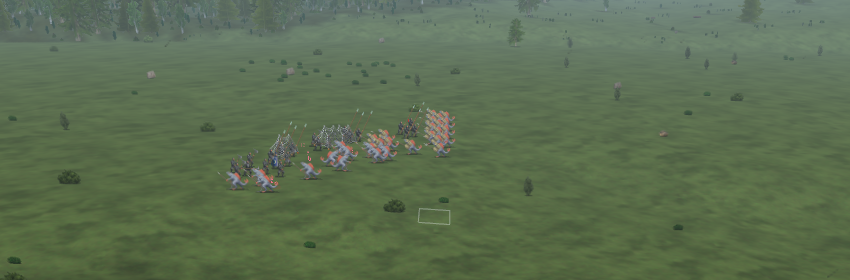
That sounds like a loss of control, and it is better understood as a change in where the skill lives. The skill of the ordinary real-time game is reflex. The skill here is foresight. You are writing a plan for a fight you cannot see yet, against a plan you cannot read, and everything you control has to be decided before anything happens.
Formation is the first decision. Squads are placed on the field with their roles in mind. Some hold the front, some wait at the back, some are sent around the flank. A narrow block does one thing well and a wide line another, and troops that should protect a mage have to be somewhere near the mage. Orders are the second. A squad can be told to attack, to hold and then attack, to keep its distance and shoot, to guard its commander or to fall back. It can also be told which kind of enemy to go after, such as archers, large creatures or the nearest foe. A hold order does not last forever, so the plan has to begin with a deadline.
The script is the third, and it is where the art is. A mage’s script says what to cast in which round. The hard part is the ordering: which protective spell first, when the damaging one arrives relative to the first contact, where the mage stands while the rest of the army holds. A god or strong commander who spends several rounds building up before charging is safe if the line holds and in great danger if it does not. Because casting takes time and can be interrupted, and because magical effects end when the battle reaches its closing rounds, every battle has a window, and your plan has to fit inside it.
What players discover is that preparation compounds. A commander with a well-tested script beats one who left it to chance. A bait, a scrap of a fight designed to draw an enemy into bad ground or a bad match-up, is a real tool. So is a feint, in which a small force pulls an opponent’s attention while the real blow lands elsewhere. A player can learn an opponent’s habits from how their armies set up, and then deliberately do something else next time. The battle is not random chaos between the plans; it is the moment at which two sets of guesses are tested against each other.
Sieges, and the trap of the safe reinforcement
A fortress changes everything about the fight. An attacker cannot walk in. The walls must be worn down over several turns, by troops who are suited to it, while the defender repairs, and while both sides consume supplies. Only when the walls are down can the attacker storm, and then the defenders have the walls on their side.
That makes a siege a clock. The defender knows the state of the wall and the attacker does not. The attacker knows whether a relief army is coming and the defender may not. Storming happens after movement, so a relief army can arrive in time to hit the besiegers first, and a besieger who is careless about that is a besieger who loses the siege in a single turn.
There are also traps. A second army that marches into a besieged fortress does not always fight alongside the first. Depending on its orders, it can be locked in as one more thing to be besieged, and two armies that might have won together are beaten separately. A sensible-looking reinforcement can be a disaster. There is also the question of where to fight at all: in the fort, or outside it, holding the province or holding the fortress, since those are different places with different consequences.
One player described a classic siege feint: “Sieging a fort to lure enemy main army just for your troops to move to another fort further away that he can’t reach in time before you break the walls.” The siege was never the goal. It was bait.
Community discussion of siege meta notes that flyers, wall climbers, ethereal units, and ranged units all have ways of ignoring the walls, which means a fort’s protectionprotection · What stands between a unit and a blow, from its armour plus any natural protection of its own. The defender adds a DRN to it, and a hit wounds only when the damage total is higher, so a tie does nothing. Full article is not absolute — it is a filter that stops some armies and slows others. A supercombatantsupercombatant · The fullest form of the single-unit plan, which is one unit buffed with spells and equipped with the best items, able to defeat whole armies in one battle. Full article “stacks every possible defensive mechanic available and tries to survive and outlast the opposition,” which is another way of saying that the fort is a place where the defensive oniondefensive onion · The idea that stacked defences multiply instead of adding, so each layer that blocks most attacks makes a unit far harder to kill than any single layer could. Full article has an extra layer.
Layer ten: hidden hands
There is a whole class of actions in Dominions that look nothing like an army. Assassins slip into a province and try to kill a commander. Spies raise unrest or steal knowledge. Some creatures seduce, corrupt or lure enemy leaders away. Stealthy units move without being seen and appear in the heart of a province. Some spells work at a distance, striking a specific place or person from far away.
These tools matter because the game’s strength is concentrated in a few people. A nation that has built an entire plan around one mage, one holy man or one god can be undone by a cheap agent at the right moment. The defence, in return, is to spend on bodyguards, on patrols, on spreading your key people out, and on keeping your most valuable piece somewhere unexpected.
Community discussion of assassins highlights the Glamour path, which is new in Dominions 6 and fits among the sorcery paths. Glamour covers illusions, dreams and luck, and its stealth properties make it a natural fit for assassins and raiders. A Glamour assassin equipped with a Dream Spool for five gems gains two free Warrior Illusions plus a temporary Glamour gem, making it a surprisingly effective killer for the price.
Layer eleven: the turn is a weapon
All players give orders at once, and then the turn resolves together. Nobody sees what anyone else chose until it is done. That single rule changes what decisions are.
You are never reacting to a move. You are anticipating one. If you send an army to attack a province, you are guessing the enemy will not reinforce it, or will not send its own army to your capital, or will not move its main force away at the same moment. Two armies can cross paths. Two plans can collide in ways that neither author intended. A feint works because your opponent has to decide, blind, whether it is real.
The order of events within a turn is also a resource, and the specific orderings matter more than they first appear. Recruitment happens early, so a unit hired this turn can defend this turn. Friendly armies move before hostile ones, so reinforcements can arrive first. But the most important ordering is the one that separates magic from movement: magic-phase movement happens before normal movement. A mage with teleport or cloud trapeze can appear in a province and start a battle before the enemy’s army has moved at all. Stealthy units that are already in place attack alongside the magic phase. And castle battles happen after field battles, so a relief army can attack besiegers before the besiegers storm the walls.
This is why the teleporting thugthug · A single commander built up with gear and buffs to win fights on its own, used to take provinces cheaply. A light thug beats small province defence; a heavy one handles any undefended troops. Full article is such a threat and why defending against one is so hard. The thug does not need to outrun your army, because it does not move on the same schedule as your army. It appears in the province, does its work, and is gone before the main force has resolved its movement. The same rule explains why stealthy units are so valuable and why patrolling is a real skill rather than an afterthought: a stealthy unit that is already in a province attacks on the magic phase, and the defender’s ordinary army may not get to respond at all.
Community raiding guides are explicit about this: “Turn order is fundamental to effective raiding and wind ride/teleport/any movement skill that takes before the standard phase literally decides games. To get the most from your thugs you need to understand turn order.” The magic phase is not a detail. It is a weapon.
Layer twelve: other people
Everything above is true against the computer. It becomes something else against other people.
The game can be won by playing the players as much as by playing the map. Alliances are made, kept and broken. Two nations agree to leave each other alone and pour everything into other fronts, and each of them keeps a secret eye on the border, because the agreement is only words. A player who is losing can offer a pact to someone stronger. A player who is winning can be ganged up on, or can exploit the fact that the others cannot agree who should do the ganging. Reading what your neighbours want, and what they will pretend to want, is a large part of the skill.
The community has spent a great deal of effort analyzing this, and the analysis is more formal than one might expect for a game with sprite graphics from another decade. Non-aggression pactsNon-aggression pact · An agreement between players to keep a border quiet. The game has an in-game version, but most multiplayer diplomacy happens outside it, in chat. Full article — NAPs — are the community’s name for the mutual agreements that keep a border quiet. The game has an in-game NAP mechanic, but most multiplayer diplomacy happens outside the game, in chat. The community’s own written treatises on the subject distinguish at least three doctrines: the loose understanding that the deal covers armies but not scouts or remote spells; the strict in-game version where any mechanic the game flags as a violation counts as a break; and the indirect version, where a player who has not technically broken the treaty is still abusing the threat of being called a breaker to freeze a neighbor in place while doing something legal that harms them.
The game-theoretic problem is real. Out-of-game deals give the players who make them a structural advantage over the rest of the lobby; as one community treatise argues, the more extravagant the deal, the larger the edge it gives. Two players who agree to a safe border before the game begins can rush a third player on turn three, and the third player will not see it coming because they did not know the deal existed. At the extreme, a nine-player game can become six-versus-three, then four-versus-two, then three-versus-one, until two players are left not because either of them played better but because they started on the winning side of a cascade. This is the game’s version of the Risk problem: the optimal play is to be in the largest coalition, and the largest coalition wins by arithmetic rather than by skill.
What the community has not settled is whether this is a flaw or a feature. Some players treat diplomacy as the highest skill in the game. Others treat out-of-game deals as corrupting the game’s fairness. The disagreement is itself part of the game’s culture, and the fact that the community has produced treatises on it — not forum posts, treatises — tells you something about how seriously the player base takes the meta-game.
There is structure in it. Players often report that multiplayer games follow a pattern, in which one player is hit early, a few strong nations emerge and the rest are picked off, and that coalitions against the leader would be the best play but are rare. Whether that pattern is stable is an open question, but the existence of the question shows how much of the game takes place between people.
Then there is disclosure. A deterrent works only if the other side knows it exists, so sometimes you want to be seen. A surprise works only if nobody sees it coming, so sometimes you want not to be. Deciding what to reveal, to whom and when is a game inside the game. You can tell your ally a half truth. You can leak a plan you never intend to follow. You can march an army through the province where your neighbour’s scout will see it, and watch what he does.
Above all, there is the moment. A player is poking around your borders, and has been for a dozen turns, and you think you understand his plan. Then one morning the report says there is an army in a province where there should not be one, and it is not yours. All the quiet planning, all the secret building, all the careful guesses arrive at once. That moment is difficult to describe to anyone who has not been through it, and it is why the game is said to be best with friends.
The computer is a teacher, not a rival
Playing the computer is a good way to learn, and it is worth being clear about what it is not.
The computer follows the same rules as you. At higher difficulty it gets extra resources, and it always knows which nation belongs to which player, but it plays without the things that make human games special. It does not bluff. It does not hold a grudge and then strike at the worst possible moment. It will not spend twenty turns building a quiet plan for one decisive blow. It gives you a reliable opponent against which to learn unit matchups, expansion speed and how the economy hangs together.
A human opponent does all the things the computer does not. A human reads your god and your scalesscales · The dials chosen with your pretender, such as order against turmoil or luck against misfortune. They shape the whole empire slowly but permanently. Full article before the first battle. A human notices when you have been neglecting a border. A human changes plans after losing. The same skills that win against the computer, such as efficient expansion and good composition, matter against people, and there is a whole additional layer on top. The community consensus is that the game “pushes serious play toward multiplayer” and that against humans, “it is outstanding and endlessly replayable.”
Three short stories
Numbers and names in these are invented for illustration. They are here to show a decision being made under uncertainty, not to report a result.
The long arc
A game of Dominions has a shape, and the shape is worth knowing because it explains why the early choices matter so much.
The opening is a scramble. You have a god, a small force, a handful of provinces to take, and a long list of decisions you cannot yet evaluate. The danger is slowness, and the reward is compounding.
The middle game is where the maps diverge. Borders form. Neighbours meet. Faith starts to push against faith, and scouting becomes a nervous habit. Some nations are already falling behind and do not yet know it. The temples and forts you built early decide where the front can be held. Magic begins to matter, at first in the labs and then in the battles.
The late game is when everything accumulated comes due. The great spells arrive, and the world is reshaped by a few of them. Armies are larger, commanders are veterans, and each battle has a larger shadow. Thrones of ascension draw players into contests, because the usual way to win is to hold enough of them. If a cataclysm has been set, a clock is running and the pressure to act before it ends is real. Decisions made in the first ten turns, such as the shape of your god, the placement of your first forts and the direction of your research, are all still present, and they are what you have to work with.
Where to start
If this sounds like your kind of game, the honest advice is that you should expect to lose your first one, and that losing is part of the fun. The interface is old, the manual is long, and the game will not hold your hand. It will, however, reward the kind of curiosity that asks “why did that happen” after a defeat, and most of the people who keep playing it do so because the answer is usually interesting.
Here are three practical first steps.
Play one game against the computer, and treat it as a lab. Pick a nation, design a pretenderpretender · The god you design before the first turn from a limited budget of points, covering its body, magic paths, dominion, scales and how soon it arrives. Full article with a plan you can say out loud, and take note of what surprised you. The computer does not mind if you make mistakes, and the mistakes are the lessons. Watch your first battles, read what happened, and change one thing at a time.
Read the short parts of the manual that match your questions. You do not need to read it all. When something confuses you, such as why a province is producing so little or why your commander routed, look that one thing up. The manual is long but the parts you need are short.
Then find friends and play a real game. This is where the game becomes what it is. A multiplayer game, played at the pace of a turn or so a day, turns into a long conversation: a few players, each with a secret plan, each scouting the others and trying to guess what they are doing, each deciding whom to trust. A game with friends has the joy of the plan that works, the dread of the army you did not see, the pact that holds and the pact that breaks. Everyone ends up with stories, and the stories are better than anything the screenshots suggest.
Terms on this page
Generated from the terms used above. This block is what prints.
- pretender
- The god you design before the first turn from a limited budget of points, covering its body, magic paths, dominion, scales and how soon it arrives. · Full article · back to text
- dominion
- The spread of your god's faith. It is not the same as who owns the land, and it matters in battle, in unrest and in how strong your god and its sacred troops are. · Full article · back to text
- scales
- The dials chosen with your pretender, such as order against turmoil or luck against misfortune. They shape the whole empire slowly but permanently. · Full article · back to text
- blessing
- A set of bonuses granted to your sacred units when they fight where your dominion is strong. Your pretender's magic paths decide which bonuses it gives. · Full article · back to text
- sacred
- Sacred troops are a special class that needs holy points to recruit. They receive your god's blessing when they fight in a province where your dominion is strong. · Full article · back to text
- magic resistance
- A unit's defence against spells that can be resisted. The target adds a DRN to it, the caster adds one to its penetration, and the caster wins a tie. · Full article · back to text
- protection
- What stands between a unit and a blow, from its armour plus any natural protection of its own. The defender adds a DRN to it, and a hit wounds only when the damage total is higher, so a tie does nothing. · Full article · back to text
- thug
- A single commander built up with gear and buffs to win fights on its own, used to take provinces cheaply. A light thug beats small province defence; a heavy one handles any undefended troops. · Full article · back to text
- pinging
- The cheapest form of scouting, which is sending one cheap commander into a province to see what defends it, not to conquer it. · Full article · back to text
- PD
- The garrison a province raises on its own when you invest gold in it. You do not control it directly, it is capped by the province's population, and it defends automatically. · Full article · back to text
- global enchantment
- A spell that changes the whole world. Only a limited number can be active at once, and an enemy can break one by contesting it or by killing the mage who cast it. · Full article · back to text
- communion
- A collective of mages who share the burden of casting. Masters do the casting; Slaves lend their power, raising the Master's path levels, and absorb the fatigue. · Full article · back to text
- fatigue
- Strain that builds up in a unit. Casting tires mages, heavy armour tires the wearer, and a tired unit takes armor-defeating hits much more often. · Full article · back to text
- supercombatant
- The fullest form of the single-unit plan, which is one unit buffed with spells and equipped with the best items, able to defeat whole armies in one battle. · Full article · back to text
- fluffer
- A mage whose whole job is to buff a thug before the fight and then retreat. · Full article · back to text
- defensive onion
- The idea that stacked defences multiply instead of adding, so each layer that blocks most attacks makes a unit far harder to kill than any single layer could. · Full article · back to text
- DRN
- Two open-ended dice added together. Most contests in the game add one to each side's value before comparing the totals. Written drn, in lower case, when only one die is used. · Full article · back to text
- armor-defeating hit
- A hit that lands when the defender's protection roll comes up at its minimum. It ignores a quarter of the target's protection, and becomes far more likely as fatigue rises. · Full article · back to text
- open-ended roll
- A die roll with no upper limit. A 6 is worth 5 and the die is thrown again with the result added, for as long as sixes keep coming. · Full article · back to text
- bless rush
- An early strategy of flooding the map with blessed sacred troops to overwhelm opponents before they are ready. · Full article · back to text
- NAP
- An agreement between players to keep a border quiet. The game has an in-game version, but most multiplayer diplomacy happens outside it, in chat. · Full article · back to text
Last updated 2026-09-30 by JakeVerified for 6.37 (current)